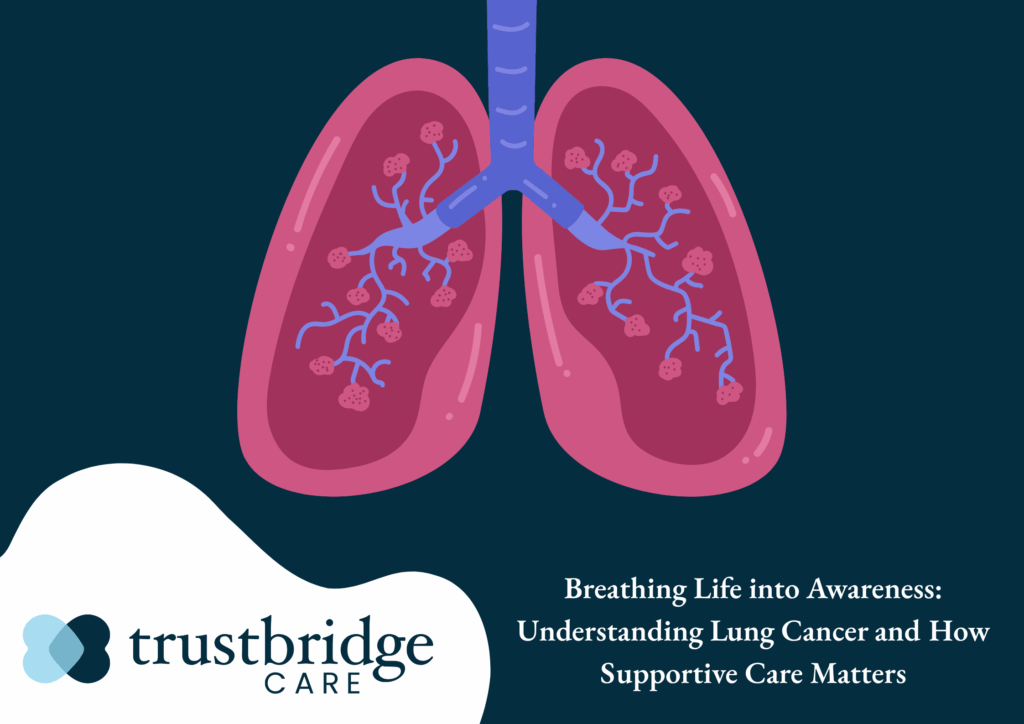
What is lung cancer and the types
Lung cancer begins when cells in the lung start to grow uncontrollably. It is described as primary lung cancer when it starts in the lung itself (as opposed to cancer spreading to the lung from elsewhere).
There are two main categories of primary lung cancer in the UK:
- Non-small-cell lung cancer (NSCLC) – this is the most common type, accounting for around 80-85% of cases. Sub-types include squamous cell carcinoma, adenocarcinoma and large-cell carcinoma.
- Small-cell lung cancer (SCLC) – less common but tends to grow and spread more quickly.
Understanding the type is important because it influences treatment options and prognosis.
Statistics in the UK and common causes
Lung cancer remains a major health challenge in the UK. Some headline figures:
- Around 49,300 new lung cancer cases occur each year in the UK (for 2017-19 data) and lung cancer accounted for about 13% of all new cancer cases.
- It is the most common cause of cancer death in the UK, accounting for around 20-21% of all cancer deaths.
- Most lung cancer cases are linked to smoking — in the UK about 72% of cases are attributed to smoking.
- Other risk factors include exposure to air pollution, workplace/occupational exposures (e.g., asbestos, radon), and in some cases lung cancer arises in people who have never smoked.
- There is also a clear link between deprivation and lung cancer incidence and mortality — rates are higher in more deprived areas.
Long term effects
The effects of a lung cancer diagnosis – and its care journey – can be significant, both physically and emotionally. Some of the longer term issues include:
- Ongoing respiratory difficulties: breathlessness, reduced lung capacity, persistent cough or recurrent chest infections can remain even after treatment.
- Effects of treatment: surgery, radiotherapy or chemotherapy may leave fatigue, reduced stamina, pain, neuropathy or a risk of further complications.
- Emotional and psychological impact: anxiety about recurrence, coping with ‘what next’, adjusting to living with a chronic illness or altered lifestyle.
- Impact on daily living: the person affected may need more assistance with mobility, self-care, household tasks and may experience altered role within the home.
- For carers and families too, there can be a longer-term shift in how care is provided, and the need for ongoing support, monitoring and reassurance.
For an organisation like TrustBridge Care, understanding these long-term effects means we can contribute beyond just immediate care, helping with quality of life, dignity and continuity of support.
How TrustBridge Care can help
At TrustBridge Care we are committed to being part of the support network for individuals affected by lung cancer and their families. Here’s how we can help:
- Personalised domiciliary care: We understand that a lung cancer diagnosis may bring changing needs – from assistance with personal care and mobility to help with household tasks and rest times.
- Holistic support: We consider the person’s overall wellbeing – physical, emotional, social – so we work with other healthcare professionals and liaise with district nursing, physiotherapy and palliative services if required.
- Flexible response: Whether the individual is newly diagnosed, undergoing treatment, recovering or living with the longer-term aftermath, we adapt our care to the evolving situation.
- Comfort and dignity at home: Many people prefer to stay at home rather than in hospital; our team respect that, ensuring they receive compassionate support in familiar surroundings.
- Support for families and carers: We also recognise the pressure on informal carers. We help by providing respite support, reliable visits and open communication so families feel supported too.
- Promoting early-help and safe environment: We’re alert to changes in condition (e.g., breathlessness, cough, fatigue) and encourage prompt referrals or interventions, thereby supporting both safety and quality of life.
Closing thoughts
Lung cancer is a serious condition — but awareness, early intervention and sustained support can make a real difference in outcomes and quality of life. As we mark Lung Cancer Awareness Week, let’s remember that each person’s journey is unique and the value of skilled, compassionate care in the home is immeasurable.
At TrustBridge Care, we are proud to stand alongside individuals and families navigating this path, offering continuity, dignity and respect every step of the way. If you or someone you care for is living with lung cancer or recovering from treatment, please reach out — we’re here to help.
Thank you for reading and for being part of a community where care and compassion matter.