What is diabetes and the types
Diabetes is a lifelong condition that affects the way your body uses blood sugar (glucose). The hormone insulin, produced by the pancreas, helps glucose get into the body’s cells to be used for energy — when something goes wrong with that process, diabetes develops.
The two main types in the UK are:
- Type 1 diabetes – the body’s immune system attacks and destroys the insulin-producing cells in the pancreas. This is not caused by lifestyle.
- Type 2 diabetes – the body doesn’t use insulin properly (insulin resistance) and/or doesn’t make enough insulin. It is often linked to lifestyle and other risk factors.
- There are also less common forms (gestational diabetes, MODY, etc.).
Understanding the type matters because it influences treatment, monitoring and care.
Statistics in the UK and common causes
In the UK, diabetes is a major public health issue:
- Recent analysis shows that one in five UK adults now have diabetes or pre-diabetes — that’s 12.2 million people, including many undiagnosed.
- While type 1 is less common, around 90% of diagnosed diabetes is type 2.
Common risk or cause factors include: - For type 2: being overweight or obese, lack of physical activity, certain ethnicities, older age, family history.
- For type 1: it is an autoimmune condition and not caused by diet or lifestyle.
- Lifestyle and environment also play a strong role in the rising numbers of type 2 — unhealthy diet, sedentary behaviour, etc.
Common misconceptions
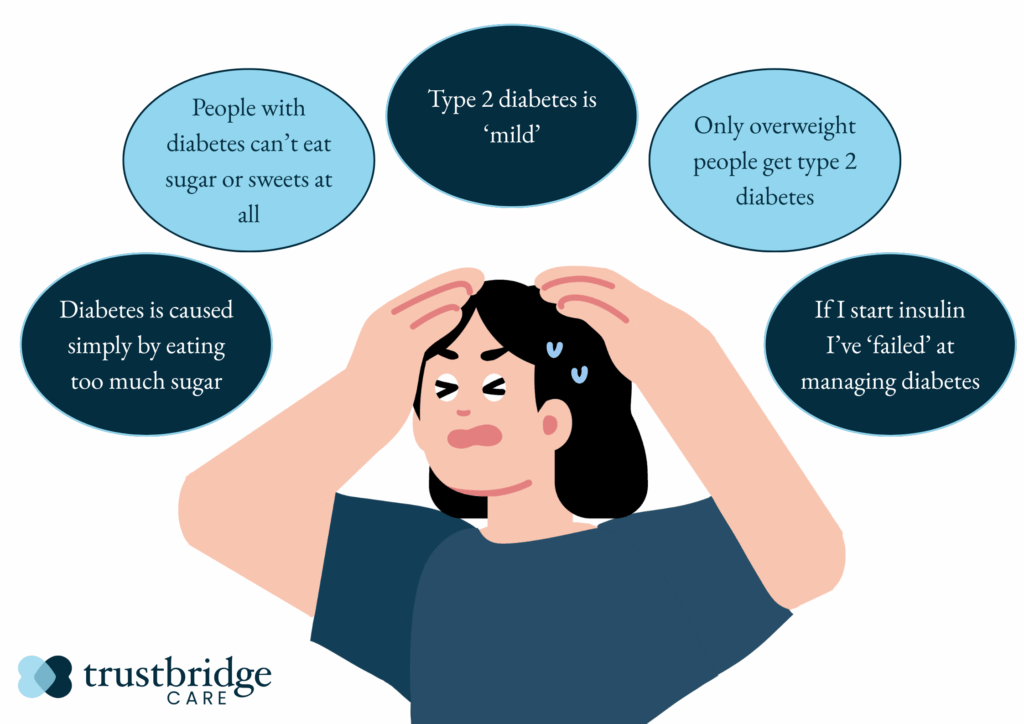
It’s all too easy for myths to get in the way of understanding and managing diabetes. A few to highlight:
- “Diabetes is caused simply by eating too much sugar.” Not true — especially for type 1 and for type 2 it’s a mix of factors.
- “People with diabetes can’t eat sugar or sweets at all.” They can — the focus is on balance, portion size and overall diet.
- “Type 2 diabetes is ‘mild’.” No — unmanaged diabetes of any type can lead to serious complications.
- “Only overweight people get type 2 diabetes.” Actually, while excess weight is a risk factor, people of healthy weight can get it too.
- “If I start insulin I’ve ‘failed’ at managing diabetes.” Using insulin is a treatment, not a failure. The disease may progress and require it.
Long-Term Effects
When diabetes is poorly managed or undetected, there can be wide-ranging and serious long-term effects, including:
- Damage to blood vessels and nerves — leading to cardiovascular disease (heart attack, stroke), kidney problems, foot ulcers, amputations and vision loss.
- Increased risk of infections, slower healing, increased hospitalisations.
- Day-to-day impacts: fatigue, changes in mobility, more frequent healthcare visits, emotional and psychological effects (anxiety, stress about complications).
- Changes in daily living and home-care needs: more support with personal care, mobility, nutrition, monitoring, ensuring safe environment.
How TrustBridge Care can help
At TrustBridge Care we are here to support people living with diabetes and their families in the home, working closely with health professionals to deliver safe, compassionate care. Here’s how:
- Collaborative care with GPs and district nurses – we liaise with the person’s GP and the district nursing team to ensure monitoring (e.g., blood sugar, foot checks), timely referrals and continuity of care.
- Tailored domiciliary support – whether someone needs help with daily living (personal care, mobility, meals), or additional support when complications increase, we adapt.
- Nutrition & lifestyle support – we recognise how important diet, exercise and regular routines are in diabetes. Our carers support the person’s healthy habits, help with meal preparation, encourage safe activity and monitor changes.
- Safe home environment and checking – ensuring the client’s home is safe, free of hazards, and appropriate for their needs (especially if mobility is reduced or complications exist).
- Support for monitoring & early warning – helping recognise changes (foot ulcers, vision changes, mobility decline, increased tiredness) and ensuring prompt escalation to the healthcare team.
- Support for carers & families – we understand the pressure on family carers. We offer reliable visits, respite support, communication and help them feel informed and included.
Closing thoughts
Diabetes is a condition that affects millions across the UK, but with awareness, good management and the right support, people can live full, active lives. During Diabetes Awareness Month, let’s commit to debunking the myths, recognising the real risks, and supporting each other — clients, families, carers and healthcare professionals alike.
At TrustBridge Care, we stand ready to make a difference in the home, offering care, respect and partnership every step of the way. Whether you’re newly diagnosed, have been managing diabetes for years, or know someone who is, we’re here to help. Please reach out if you or your loved one would like to discuss how we can support you.